
vpnandprivacy

private browser review · 2026

Firefox review: independence funded by the company it competes with

The last independent engine, funded almost entirely by Google.

57
Fair · #6 of 8 private browsers
By The VPN and Privacy team Updated 6 Sept 2026 Facts re-checked 6 Sept 2026
Runs on iOS Android Mac Windows Linux Router Browser TV
JurisdictionUnited States
Intelligence allianceFive Eyes
No-logs auditNone found
Founded2004
Ultimate owner Mozilla Foundation United States · Five Eyes
Operates Firefox Mozilla Corporation
Mozilla VPNFirefox RelayPocket
Sibling brands share the same ultimate owner as Firefox.

The Mozilla Corporation is wholly owned by the non-profit Mozilla Foundation, which sounds ideal until you look at the revenue: the great majority comes from the search default deal with Google. A browser whose independence depends on an annual payment from the company it competes with is in a genuine bind, and it is the single most important fact about it.

Public-source facts, not yet checked against primary documents. How we verify.

Lab test pending: score uses public, checkable data only. How we verify.

Verdict

Firefox is the only browser here running an engine that neither Google nor Apple controls, and that matters for the shape of the web regardless of what you personally install. It also arrives with advertisements unblocked, telemetry switched on, and its strongest anti-fingerprinting turned off because it breaks websites. Behind all of it sits one uncomfortable fact: the great majority of Mozilla's revenue comes from a search placement deal with Google, so the independent alternative to Google's browser is funded by an annual payment from Google, and that payment is now exposed to the outcome of American antitrust proceedings.

Best for

Desktop users who will configure a browser, anyone who wants container tabs, and readers who care about keeping a second engine alive.

Not for

People who want strong privacy with no configuration, and iPhone users hoping the engine argument applies there.

Visit Firefox Compare with Mullvad Browser Not an affiliate link. We earn nothing if you buy.
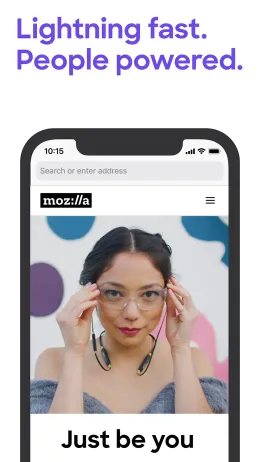
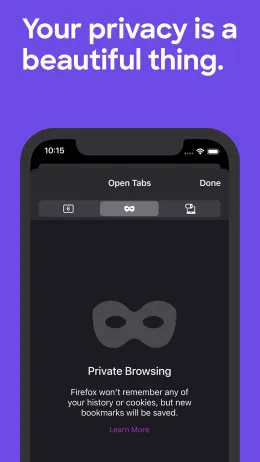
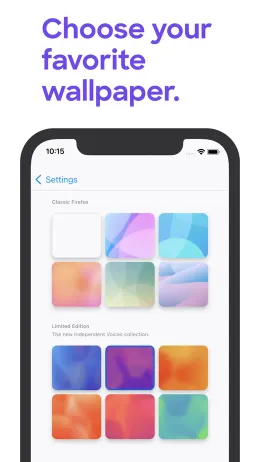
Firefox iPhone app, screen 1 of 4Firefox iPhone app, screen 2 of 4Firefox iPhone app, screen 3 of 4Firefox iPhone app, screen 4 of 4
Firefox's current iPhone app, as listed on the App Store. Screenshots are the developer's; we reproduce them to identify the product.

Score breakdown

Privacy & trust
45
Price & renewal
100
Features
62
Streaming
0
Censorship bypass
0
App quality
65
Speed (our tests)
0
Support & refunds
55
Score by dimension Firefox: Privacy 45, Price 100, Features 62, Streaming 0, Censorship 0, Apps 65, Speed 0, Support 55. PrivacyPriceFeaturesStreamingCensorshipAppsSpeedSupport
All eight dimensions scored from checkable data or our own tests.

Weights: default profile. How the score works.

Pros

  • Gecko is the only significant engine not controlled by Google or Apple
  • Enhanced Tracking Protection on by default
  • resistFingerprinting exists for users who want Tor-grade defences
  • End-to-end encrypted sync
  • Container tabs isolate sites from each other

Cons

  • Most revenue comes from Google search placement
  • Telemetry is on by default and opt-out
  • Anti-fingerprinting is off by default and breaks sites when enabled
  • Does not block ads without an extension
  • iOS version uses WebKit, so the engine advantage does not apply there

Pricing, including what it costs after renewal

PlanIntro totalPer monthRenewal totalTrue cost / mo over 3 years
Intro, per monthRenewal, per month
Renewal price matches the intro price on every confirmed plan. Prices in USD.

Free. Mozilla sells a VPN and Relay separately; the browser is funded by search revenue.

iOS app quality

App Store review analysis

50 most recent reviews across 1 storefronts, 2026-06-21 to 2026-09-03. Listing rating 4.65★ from 216,781 ratings. Version 155.0, released 2026-08-30.

65
Critical complaints 20%
iOS integration
30%
Ads / misleading
10%
Slow speeds
4%
Interface & usability
4%
Crashes & bugs
4%
Privacy concerns
2%
Praised: speed
2%
  • ★★☆☆☆ “FF nutze ich schon zig Jahre auf dem Desktop PC unter Windows und Linux.” App Store reviewer, 2026-08-03
  • ★★☆☆☆ “Hallo Team, die Seiten von otto.de öffnet er nicht.” App Store reviewer, 2026-07-27
  • ★☆☆☆☆ “Like all other browser apps, this one has become useless.” App Store reviewer, 2026-07-22

Themes tagged by keyword rules; percentages are share of sampled reviews mentioning the theme. Method.

What it does, feature by feature

Feature Firefox
Platforms iOS, Android, Mac, Windows, Linux
Open source
Blocks trackers by default
Blocks ads by default
Anti-fingerprinting
Independent engine
No paid default search deal
Tor integration
End-to-end encrypted sync
No telemetry by default

A question mark means we have not confirmed the feature, not that it is missing. Hover a feature name for what it means.

The engine argument, stated properly

There are three significant browser engines. Chromium’s Blink, which Google controls. WebKit, which Apple controls. And Gecko, which Mozilla controls, and which ships in essentially one browser.

Every other name you can think of, Edge, Opera, Vivaldi, Brave, Arc, is Chromium with different paint. If Gecko stops being maintained, the practical situation is that Google decides what a web page is allowed to be, and the only check on that is Apple’s engine, which exists to serve Apple’s platforms.

That is a reason to use Firefox that has almost nothing to do with your own privacy. It is a reason about the web as a shared thing. We think it is a good reason, and it is why Firefox appears on our private browsers ranking despite scoring below Brave on the criteria that page actually measures.

Where the money comes from

Mozilla’s revenue comes overwhelmingly from search. Specifically, from making Google the default search engine in Firefox, an arrangement Mozilla renews periodically and publishes in its annual reporting.

So the independent alternative to Google’s browser is paid for, in the main, by Google.

Nobody has shown that this has bent a particular product decision, and we are not going to imply it. The problem is more ordinary than corruption. An organisation whose income arrives almost entirely from one counterparty makes decisions with that counterparty in the room, whether or not anyone from that counterparty says anything. It shapes what gets proposed, not just what gets approved.

The arrangement is also less secure than it once looked. The default search payments made by Google across the industry have been examined at length in American antitrust proceedings, and Mozilla’s own filings and public comments have acknowledged the risk that a remedy affecting those payments would affect Mozilla severely. A browser project whose funding depends on the outcome of a court case involving its main competitor is not in a comfortable position, and readers deserve to know that before treating Firefox as the safe, stable, principled choice.

How the browsers fund themselves

BrowserWhere the money comes fromConflict it creates
FirefoxSearch default payments, overwhelmingly from GoogleDepends on its largest competitor for most of its income
BraveIts own opt-in advertising network, paid in a tokenSells advertising while blocking advertising
SafariApple hardware, plus a very large search default payment from GoogleServes Apple’s platform strategy first
Tor BrowserGovernment grants and donationsFunding sources its critics reasonably question
ChromeGoogle’s advertising businessThe browser is a data collection surface for the advertiser

This table is the honest way to compare browsers, and it is more useful than any feature list, because a browser sees everything you do and someone is paying for it. There is no option in the column that has no conflict at all. The choice is which conflict you would rather live with.

What it does with no configuration

Enhanced Tracking Protection is on by default and blocks known cross-site trackers, social trackers, cryptominers and fingerprinting scripts from a maintained list. Total Cookie Protection puts each site’s cookies in their own jar, which is a real structural improvement over blocking lists alone. Sync is end-to-end encrypted.

It does not block advertisements. A fresh Firefox on a news site looks like a fresh Chrome on a news site, and you need an extension to change that. Telemetry is on. The stronger anti-fingerprinting is off.

That combination is why our category page places Firefox fourth rather than first. It is not a judgement about the engineering, which is good. It is a judgement about first launch, which is what nearly everyone experiences.

Container tabs, which nobody else has

The feature worth switching for is containers. Each container has its own cookie jar and its own logged-in identity, so a work account, a personal account and a shopping session can run in the same window without seeing each other, and a site cannot follow you from one to another.

No Chromium browser offers an equivalent that is as clean. Profiles are the nearest thing and they are heavier and less fluid. If you juggle multiple accounts on the same services, this alone is a better argument for Firefox than any of the privacy marketing, and it is the feature we would miss most.

The iPhone app

Our App Store analysis for Firefox this cycle uses a sample of 50 recent reviews from a single storefront, which is too small to treat the sample average as a verdict. Within it the mean is well below the listing’s own average, and the leading themes are iOS integration complaints at 30 per cent of reviews, misleading advertising complaints at 10 per cent, and crashes and slow performance at 4 per cent each. Around a fifth of the sample carries a critical theme. No billing complaints, as expected for a free product.

The public listing is at 4.65 stars from roughly 216,800 ratings, a large and broadly positive base.

Bear in mind what the app is. On iOS it is WebKit with Mozilla’s interface and blocking rules, so the engine independence you might be installing it for is not present. Sync, containers of a sort, and tracking protection are.

Where it lands

Firefox is the right browser for someone who will spend twenty minutes on it: install a content blocker, turn off telemetry, set up containers, decide about resistFingerprinting. Configured that way it is excellent, and it is the only excellent option that does not hand Google or Apple another user of their engine.

Untouched, it is a decent browser with good tracking protection and visible advertisements, which is not what most people think they are getting.

Ownership and funding records for every product on this site are on the ownership explorer, and the browser fingerprint test will tell you what your current Firefox is actually exposing.

What we have not tested

We have not run our own measurements on Firefox: not what Enhanced Tracking Protection blocks across a fixed set of pages, not how identifying its default fingerprint is compared with resistFingerprinting enabled, and not its performance next to the Chromium browsers on the same hardware. The above rests on Mozilla’s published documentation and reporting, ownership records, and our own App Store review analysis. Pending scores stay pending until we have done the work ourselves.

Firefox against the top two private browsers

Feature FirefoxMullvad BrowserTor Browser
Platforms iOS, Android, Mac, Windows, LinuxMac, Windows, LinuxiOS, Android, Mac, Windows, Linux
Open source
Blocks trackers by default
Blocks ads by default
Anti-fingerprinting
Independent engine
No paid default search deal
Tor integration
End-to-end encrypted sync
No telemetry by default

A question mark means we have not confirmed the feature, not that it is missing. Hover a feature name for what it means.

Sources

1 sources · verification needs primary source check

Assembled from public sources; confirm ownership, jurisdiction and audit history against primary documents.

Frequently asked questions

Who owns Firefox?

The Mozilla Corporation develops and ships Firefox, and it is wholly owned by the Mozilla Foundation, a non-profit. The Corporation is a taxable subsidiary, which is what allows it to hold commercial search agreements that a non-profit could not. On paper this is the best ownership structure of any mainstream browser, with no shareholders to serve and no parent company selling something else. The complication is not who owns it but who pays it, which is a different question with a much less comfortable answer.

Why does it matter that Google funds Mozilla?

The great majority of Mozilla's revenue comes from making Google the default search engine in Firefox. That means the main structural alternative to Google's browser exists because Google pays for it, and the payment is discretionary from Google's side. Nobody has produced evidence that this arrangement has changed a specific product decision, and we are not claiming it has. The concern is that a single customer supplying most of your income constrains what you are willing to build, and it does not require anyone to make a phone call for that to be true.

What happened with Mozilla's terms of use?

In early 2025 Mozilla introduced a formal Terms of Use for Firefox for the first time, alongside changes to its documentation, and the wording granting Mozilla a licence to use information you input was widely read as far broader than intended. Language previously stating that Mozilla does not sell your data was also removed from a frequently asked questions page, which Mozilla later explained by pointing to how broadly some jurisdictions define selling. The company revised the wording after the backlash. It was a communications failure rather than a demonstrated change in what the browser does, and it damaged trust in a project whose main asset is trust.

Is Firefox telemetry a privacy problem?

Telemetry is on by default and can be switched off in settings. Mozilla publishes what it collects in detail, which is more transparency than the commercial browsers offer, and the data is largely about performance and feature usage rather than which pages you visit. The objection is not that the data is sinister but that the default is opt-out, which for a browser marketed on privacy is the wrong way round. Our category ranking scores defaults, so this counts against Firefox there.

Should I turn on resistFingerprinting?

Only if you understand what it will break. It applies Tor Browser's approach of standardising values so users look alike, which means reporting a fixed timezone, spoofing the screen size, restricting fonts and rounding the window dimensions. That does genuinely reduce your fingerprint. It also breaks websites in confusing ways, shows you the wrong local time, and puts you in a small crowd of people who have enabled it, which is its own signal. For most readers the standard Enhanced Tracking Protection plus a content blocker is a better trade.

Does Firefox on iPhone use Gecko?

No. Apple requires every browser distributed on iOS to use WebKit, so Firefox on iPhone and iPad is Safari's engine wearing Mozilla's interface, with Mozilla's own blocking rules and sync on top. Regulatory changes in Europe have begun to permit alternative engines in principle, but shipping one in practice is a large piece of work that has not landed in the general release. If your reason for using Firefox is engine independence, that reason does not exist on your phone.